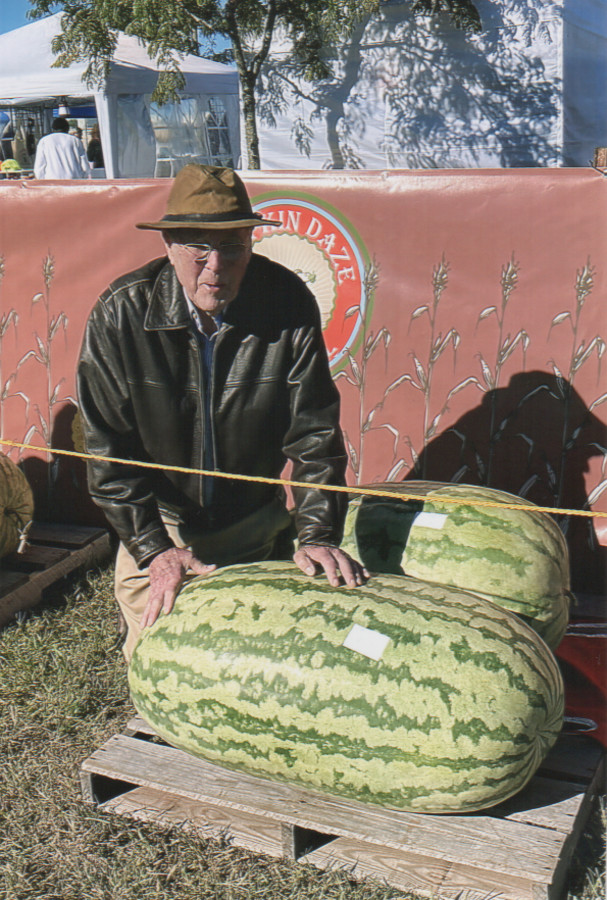
In this picture, you can see the legendary grower Lloyd Bright with a giant watermelon weighing 221.4 pounds. This was just one of his many achievements. His personal best was a watermelon weighing 268 pounds.
So, if you’re wondering how it’s possible to grow a watermelon that big, I’ll explain some basic techniques and everything you need to get started on growing your first giant watermelon, which can easily exceed 100 pounds on your very first attempt. But first, let’s take a look at some history.
Which watermelon variety can grow this big?
That’s a great question, because not every watermelon variety can reach truly gigantic sizes. The variety with the greatest potential is called Carolina Cross. It was developed through selective breeding in the 1970s to improve the chances of growing record-breaking watermelons for giant watermelon competitions.
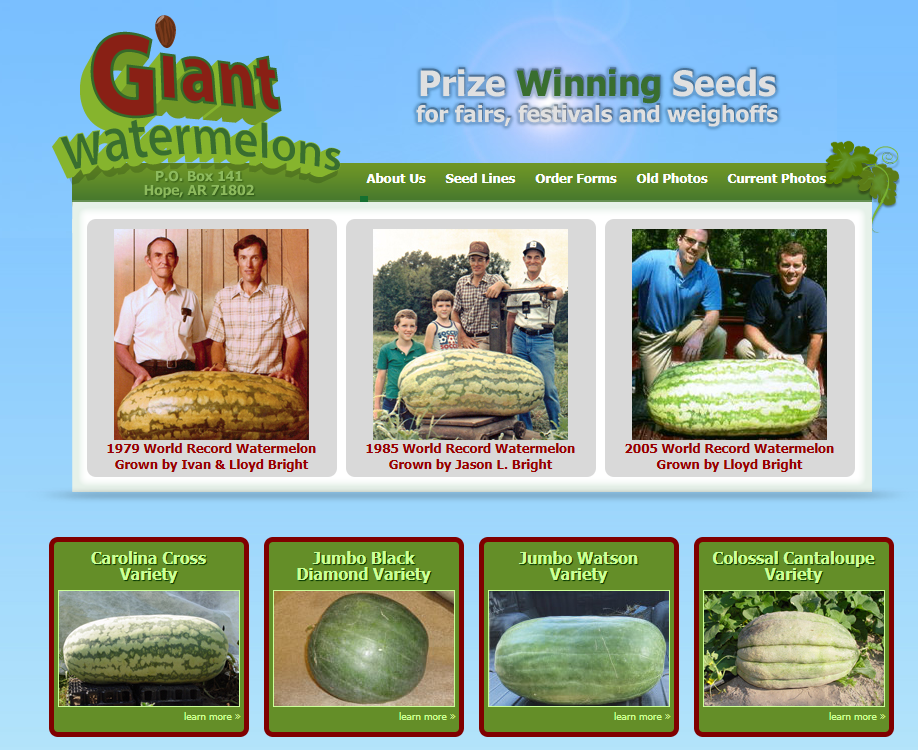
In 1979, Lloyd Bright and his father managed to grow the first watermelon to weigh more than 200 pounds, winning a $10,000 prize. Lloyd Bright therefore played a major role in advancing the genetics of giant watermelons over the years. Since then, seeds from these varieties have become available to growers.
The current world record belongs to a giant watermelon weighing 350 pounds, which is also a Carolina Cross. I have to admit that there’s a lot of work involved in competing for local and world records. However, that doesn’t mean you can’t start growing giant watermelons as a hobby and achieve an incredible result of more than 100 pounds on your first attempt.
Where can you buy the seeds?
I have both bad news and good news for you. Lloyd Bright still sells seeds through his website, but according to a message he sent me personally, this appears to be the last year he’ll be selling them.
Lloyd Bright is around 83 years old and has spent more than 50 years carefully growing giant watermelons. Getting great results takes a tremendous amount of dedication.
That’s what makes this situation a little sad. Of the few websites that sell these seeds, Lloyd Bright’s online store offers the confidence of getting high-quality seeds from parent watermelons that weigh close to or more than 200 pounds.
So, if you’d like to buy his seeds, you can order them directly from the official Giant Watermelons website by simply clicking here.
Lloyd Bright currently sells three Carolina Cross seed varieties, whose parent watermelons weighed 191, 200, and 211 pounds, respectively.
However, Carolina Cross isn’t the only variety capable of producing giant watermelons. You can also grow Jumbo Black Diamond, a round watermelon variety that can reach extremely impressive weights and has even produced fruits weighing more than 200 pounds.
In my experience, Jumbo Black Diamond seeds are easier to germinate. My first Jumbo Black Diamond seed sprouted directly in the ground at a temperature of around 86°F.
Carolina Cross seeds are generally recommended for indoor germination at a slightly higher, controlled temperature. However, this is also quite easy to do if you follow the recommended guidelines.
Either way, when you purchase the seeds, you’ll receive a basic guide to growing giant watermelons.
One thing I’d strongly recommend keeping in mind is that watermelons need warm temperatures and plenty of direct sunlight, ideally between 8 and 10 hours a day. So, it’s best to wait until summer.
If you already know a little about growing watermelons, you can even start germinating your seeds indoors up to a month before summer, provided you have a warm, controlled environment. Then, all you need to do is transplant the seedlings into the ground when conditions become favorable.
Giant watermelons need plenty of space, loose soil, and lots of nutrients. So, if your soil is compacted, you may need a few tools to prepare the growing area properly before planting.
To give your watermelon the best chance of growing well, I recommend loosening the soil across a 10 × 10-foot area to a minimum depth of around 18 inches.
If you have sandy soil, this should be fairly easy. That wasn’t the case for me, though, so don’t worry if your soil is hard. With a few basic tools, you can still get the job done.
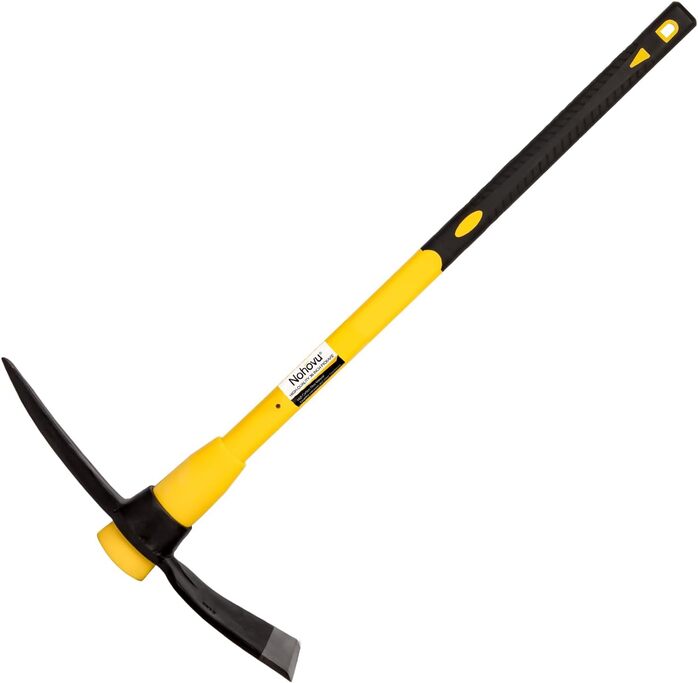
1. Pickaxe
A good pickaxe is essential for loosening the soil, whether it’s relatively soft or hard. In my opinion, it’s the best hand tool for this job, and it’s exactly what I used.
You can loosen quite a bit of soil with a pickaxe. Hard soil will require some extra effort, but there’s no need to rush. If you spend just a few minutes a day working on it, you can make steady progress over several days.
Available here on Amazon
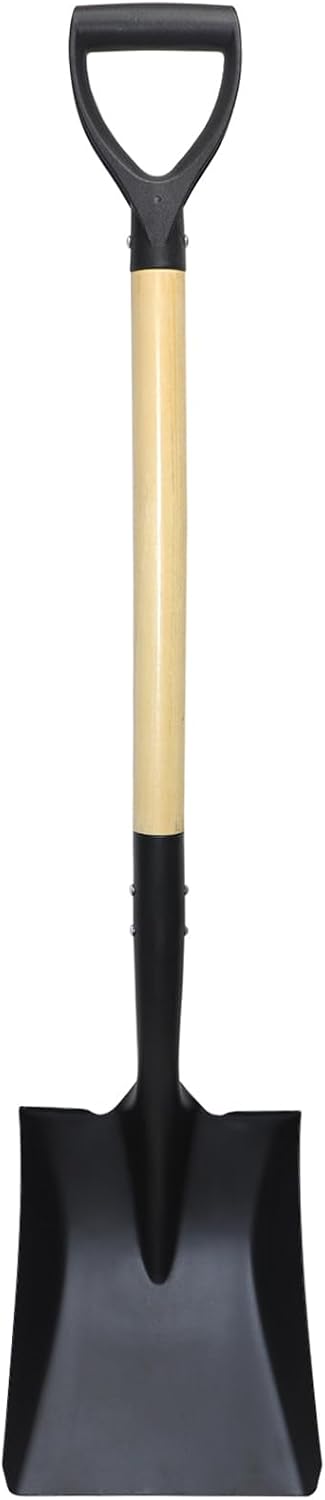
2. Square-point shovel
Another essential tool for working with soil is a shovel, especially a square-point shovel. It’s more effective than a pointed shovel when you need to remove a large amount of soil quickly.
I recommend using it to remove the hardest soil and then breaking up the clumps to make the ground looser. This is important because watermelon roots need to be able to explore the soil properly.
Available here on Amazon
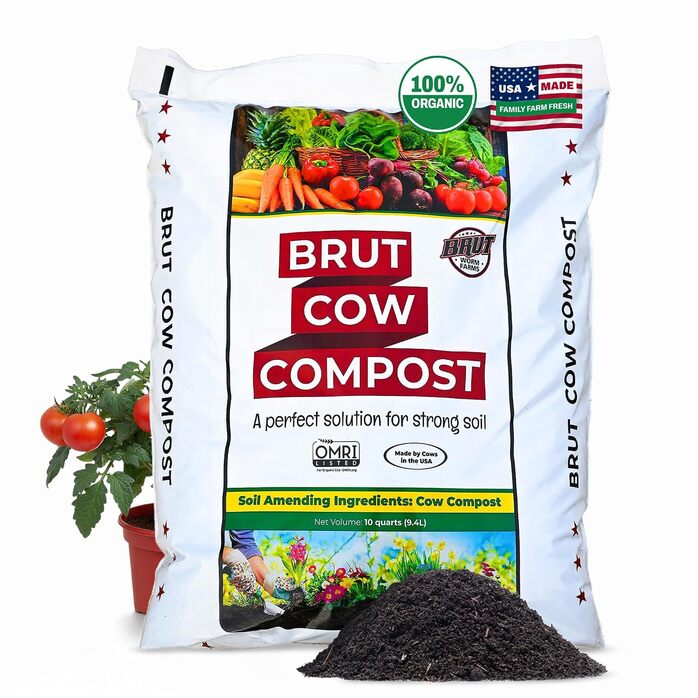
3. Brut Cow Compost
To improve soil structure and provide nutrients, you can use cow manure compost, which is commonly used when preparing growing areas for giant watermelons.
It’s especially useful if you have hard soil because cow compost helps improve soil structure and reduces compaction over time. This can become a common problem as the plant’s water requirements increase.
Available here on Amazon
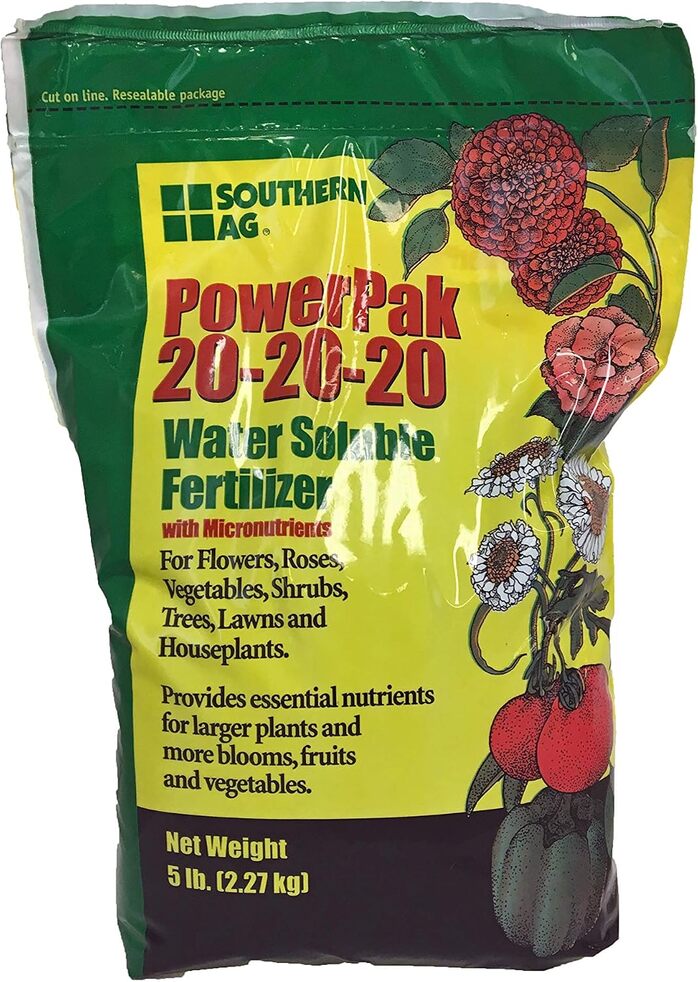
4. Water-soluble 20-20-20 fertilizer
Once your plant has developed around 10 true leaves, you can start adding a little fertilizer to the water. It’s not absolutely necessary, but many giant watermelon growers use 20-20-20 fertilizer during the early stages to encourage leaf growth.
This is because nitrogen plays a particularly important role in the development of the plant’s foliage.
You want your plant to keep producing new leaves for approximately 35 to 40 days, until the first male flowers begin to appear, followed by the female flowers. Female flowers are easy to recognize because they have a tiny watermelon developing behind the flower.
Once this stage has passed and the plant begins producing fruit, it’s generally recommended to reduce nitrogen to avoid excessive vegetative growth.
Some growers use fertilizers with relatively low nitrogen concentrations, sometimes as low as 6%, while significantly increasing potassium levels. In some water-soluble fertilizer formulas, potassium can account for 30% or even 50% of the NPK composition.
If you prefer, you can have your soil tested before planting. The basic guide included with seeds purchased from Lloyd Bright’s store also contains recommendations for the nutrients your soil should have.
Available here on Amazon
Training the vines
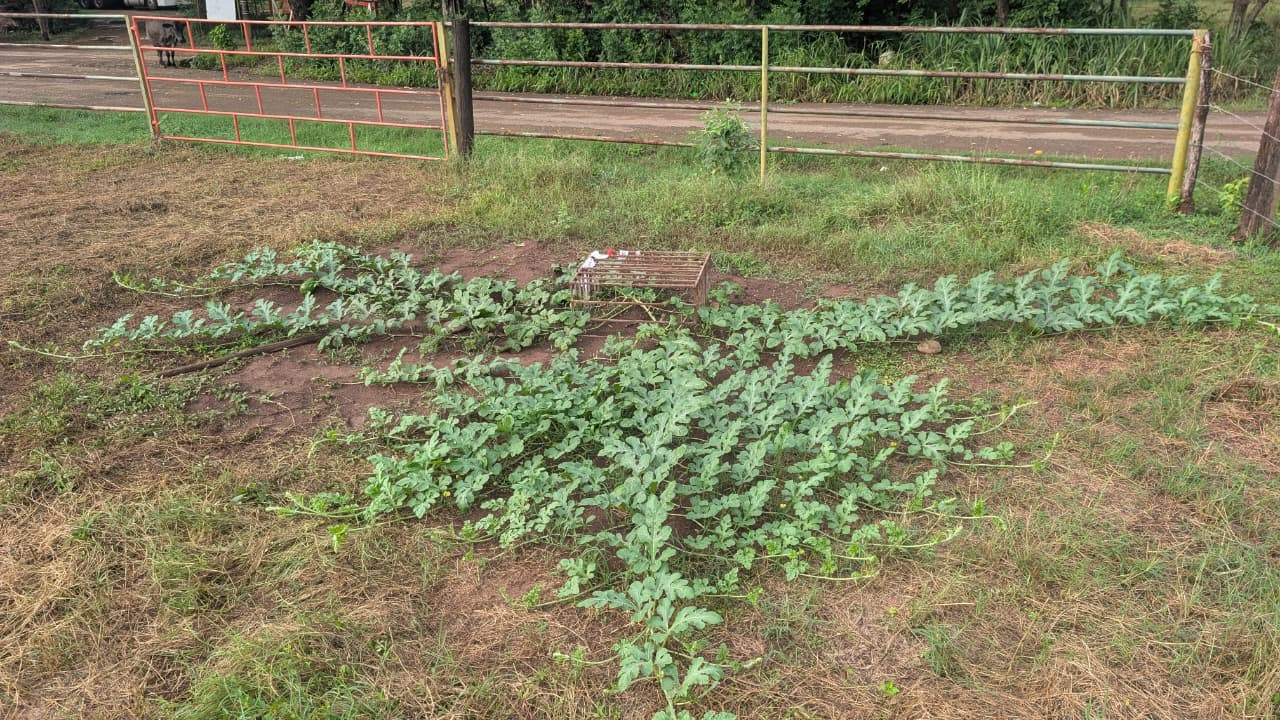
This is what my Jumbo Black Diamond watermelon plant looked like around 36 days after emergence.
I’m not going to claim that there’s only one correct way to train the vines, but many growers use a method known as the “Christmas tree” pattern.
With this method, the first vine growing out from the plant continues forward, allowing secondary vines to develop along it, but no tertiary vines. The secondary vines grow almost alongside the main vine but extend out to the sides and shouldn’t develop their own secondary branches.
This is just one approach. Many growers use different methods and have achieved excellent results.
There’s even a training method known as the “spaghetti” style. You can explore different techniques and read expert opinions on giant watermelon growing forums such as BigPumpkins. You can also join the Giant Watermelon Growers group on Facebook.
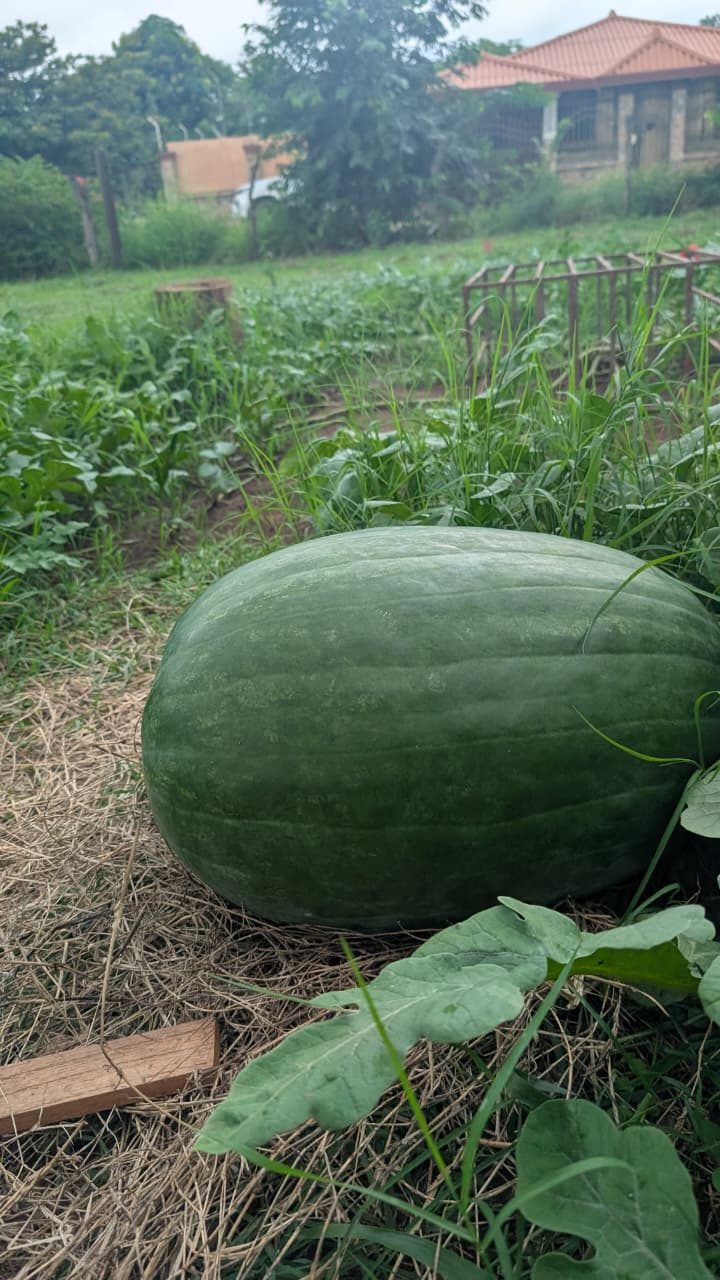
My Jumbo Black Diamond watermelon at 20 days
This is my own Jumbo Black Diamond watermelon, already looking quite impressive at just 20 days after pollination. It weighs close to 50 pounds and can continue growing for up to 90 days.
One interesting characteristic of these watermelons is that they can continue growing even after reaching maturity, which makes me really curious about how big this one will eventually get. There’s still a long way to go before it reaches 55 days, which is my goal. By then, I hope it will be approaching 100 pounds.
Just keep in mind that if you want to grow truly giant watermelons, it’s generally recommended to keep only one fruit per plant.
And that’s all for today! There’s so much more I’d like to add, but this article would become endless if I covered everything.
All I can do is encourage you to get some seeds and start this adventure yourself. I’m sure that caring for the plant and watching it grow can keep you busy, and, of course, you might end up growing a giant watermelon that amazes everyone, both in person and on social media.